



THE AUTO INDUSTRY IS AMERICA'S LARGEST EXPORTER
Automakers and their suppliers are America’s largest exporters, beating the next best-performing industry by nearly $36 billion in exports over the past ten years.
Top Five U.S. Exporters by Industry (2018, in billions)
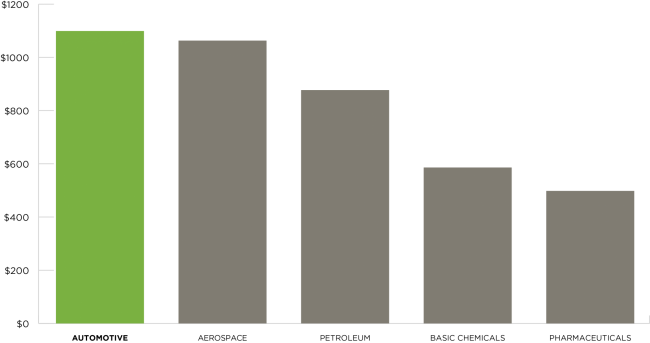
The automotive sector represents the nation’s No. 1 export industry and is responsible for driving job creation and economic growth across the country. The U.S. automotive sector has seen its exports rise by 76% since 2009.
Each year, Ford, General Motors and Stellantis export about 1 million American-made vehicles to more than 100 different foreign markets. This is further evidence of the economic significance of U.S. exports to job creation.
Increased exports have far reaching impacts on the economy overall. Ford, General Motors and Stellantis produce more of their vehicles, buy more of their parts, conduct more of their research and base more of their workers in the United States than their competitors. These differences represent billions of dollars in investment and purchases, representing millions of American jobs.
Automaker and Supplier Exports (in billions)
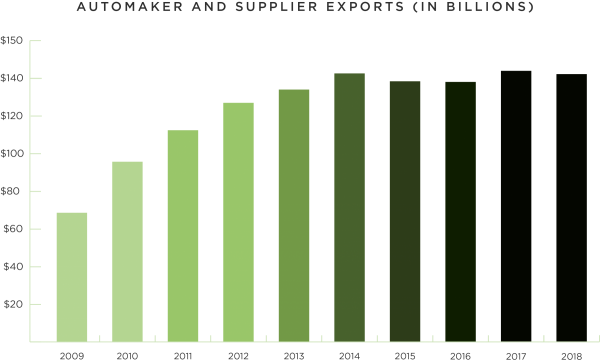
The U.S. automotive sector has seen its exports rise by 76% since 2009.
-
U.S. Automakers Hosting Asia-Pacific Economic Cooperation Meeting in Detroit
FOR IMMEDIATE RELEASE
-
-
-
-